The Oncologist Next Door
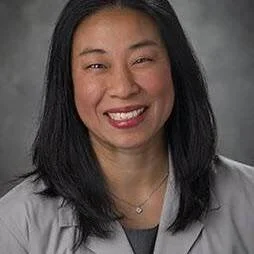
For Breast Cancer Awareness Month, Mom and Bluffer Dr. Liz Chung Knight talks screening, genetics, wine, HRT, risk - and reasons for hope.
Dr. Liz Chung is a medical oncologist with Advocate Medical Group in Libertyville. She’s also known as Liz Knight in Lake Bluff, where she lives with her family of other Knights - husband David, also an oncologist, son Ethan (13), daughter Allie (12), and son Andy (9). As a friend of The Chat, Liz generously offered insight into what women actually want to know.
What does it mean to have dense breasts?
Dense breasts have more glandular and connective tissue relative to fat. That can make abnormalities harder to see on a mammogram and is also associated with a modest increase in breast cancer risk. Supplemental ultrasound may be recommended, and women with a lifetime risk above 20% may also be candidates for breast MRI. Talk with your doctor about what screening is appropriate for you.
Should I worry about radiation from mammograms?
The benefits of screening mammography far outweigh the minimal radiation risk. A routine mammogram delivers about 0.7 mSv, roughly equivalent to three months of natural background radiation. Bottom line: get your mammograms.
Does alcohol really increase breast cancer risk?
Yes. Consistent observational evidence shows that even less than one drink per day is associated with increased breast cancer risk compared with no alcohol, and risk appears to rise with cumulative lifetime intake. If you drink and are concerned about breast cancer risk, consider limiting alcohol to a few drinks a week.
What about HRT?
It’s complicated and should be an individualized risk- benefit discussion. HRT can increase breast cancer risk, although the absolute risk is low for many healthy women ages 50–59 using it for a typical duration. Use the lowest effective dose and avoid compounded “bioidentical” hormones. HRT is generally not recommended for women with a history of breast cancer. The data—and guidelines—continue to evolve.
No breast cancer in my family. Am I in the clear?
No. Roughly 1 in 8 women will develop breast cancer, and many have no family history. That’s one reason routine screening matters. A strong family history of breast or ovarian cancer may warrant genetic counseling and testing for inherited mutations such as BRCA1 and BRCA2.
My mammogram was normal. What should still send me to the doctor?
A new or persistent lump, nipple discharge, skin changes, an underarm lump, or persistent one-sided breast pain or tenderness should be evaluated—even after a normal mammogram. If something is new, persistent or worsening, get it checked.
What gives you hope right now?
The pace of progress is remarkable. New breast cancer drugs are becoming available far more rapidly than they were 15 years ago, including treatments targeted to specific tumor mutations and immunotherapies for some aggressive cancers. We’re curing more patients, helping many with incurable disease live for years with good quality of life, and studying ways to use less chemotherapy when it can be done safely. The future is bright.