The Year After
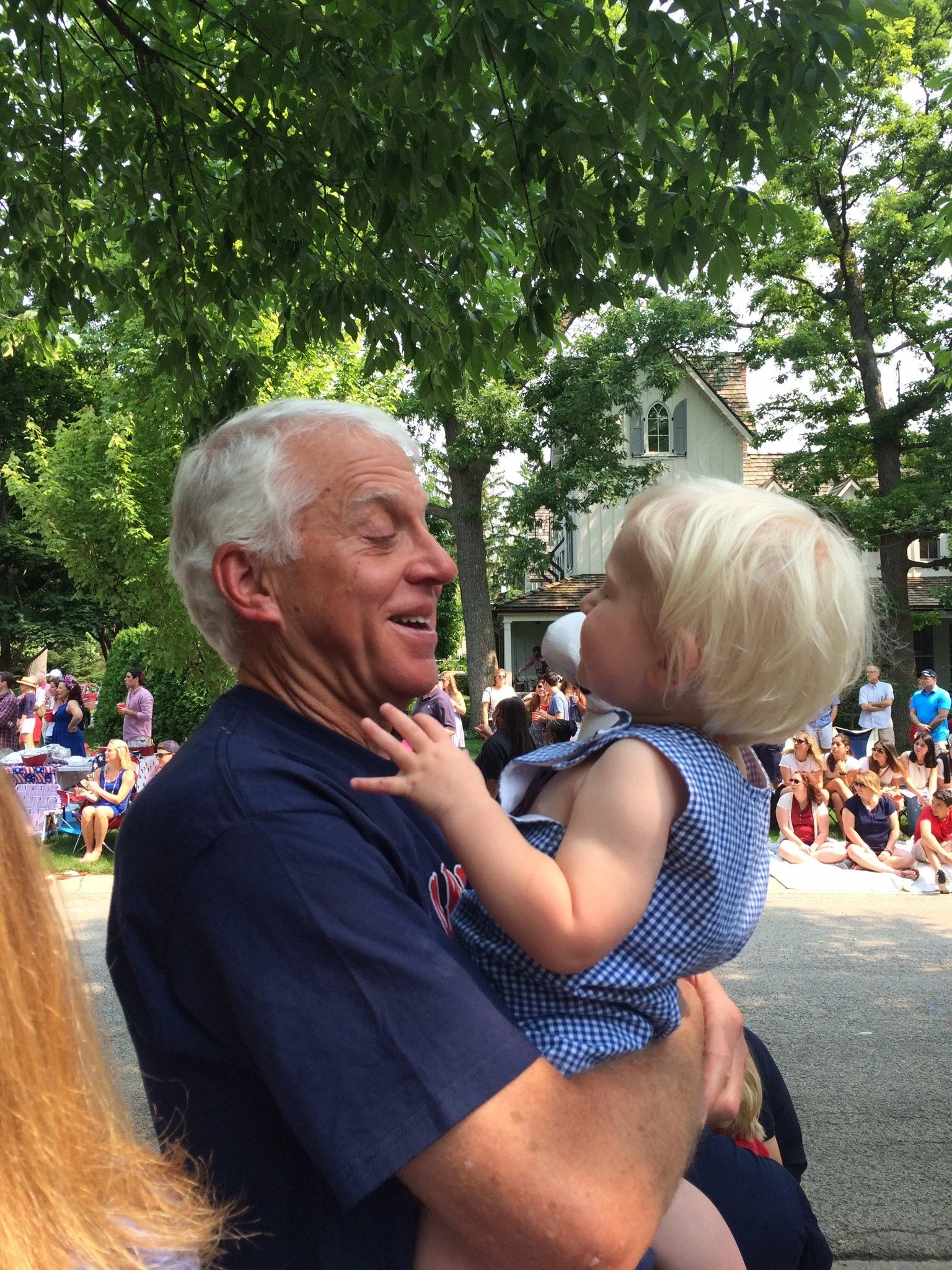
Jeff Browne with his youngest of ten grandchildren, Graham Marsch.
The Browne family on grief, remembrance and the people that still carry them through
There are plenty of impressive things one could write about Jeffrey Martin Browne. He was a star pitcher at Western Michigan University, drafted by the Los Angeles Angels and played in their farm system until an injury ended his baseball career. He went to law school, built a career, married his high school sweetheart, Anne, and together they raised three daughters and eventually welcomed ten grandchildren. But ask his wife, Anne Browne, or daughters Brooke Davis, Alison Graf and Amy Marsch what made Jeff the center of their family and none of them starts there. They talk about showing up. “My dad made family his number one priority—not with words but actions,” Amy says. “Whatever their interest, he was there to support them. He knew the grandchildren’s friends. He called after tests and practices. He asked my daughter whether she had done any turns or leaps at dance. He stopped at Brooke’s house after golf looking for marshmallows and hoping the family would be home.”
A year later, Brooke has learned that grief “is not linear or predictable and does not look or feel the same for anyone.” For Amy, the first anniversary was harder than she expected. “Knowing that I have to move through another year—another year of my dad not being here—is very overwhelming,” she says. For Alison, strangely, it wasn’t September 2 that undid her. It was September 3. “You’d think the anniversary date would have been the hardest, but the day after was actually incredibly sad for me,” she says. “It felt like we had just lost him all over again.” Brooke found her own birthday unexpectedly painful. Every year, her father called to sing “Happy Birthday” and gave her a box of Frango mints. This year, the call didn’t come. Her husband and sister each remembered the tradition and independently gave her a box of mints. “That thoughtfulness just wrecked me,” she says.

L–R: Anne Browne, Amy Marsch, Brooke Davis, Alison Graf.
There has been sadness. But there have also been family vacations, laughter and endless “Papa stories.” Anne and her daughters traveled to Ireland in Jeff’s honor. On the anniversary of his death, they went to the beach together. “My dad taught us the importance of showing up,” Amy says. “And that is what we do.” The people around them have been showing up, too. A neighbor played a solitary round of golf on Jeff’s birthday at the course where Jeff played on Mondays. A friend who doesn’t drink coffee continues to bring Anne a Venti Bold with cream—the coffee Jeff used to bring her—nearly every week. Another friend spent Mondays with Anne after a broken kneecap and knee replacement, running errands and walking her dog through a Lake Bluff winter.
Brooke keeps a box so full of letters and cards she can barely close it. People brought meals and flowers, made donations and took days off work to attend Jeff’s service. One of her son’s friends left the family a handwritten note about how much he loved Jeff, taped to a container of their favorite pimento cheese. Amy has found particular comfort in friends who have already lost parents themselves. “They know what’s going to be hard for me before I even go through it,” she says. “They don’t give me any of the clichés, nothing about how time will make it better. They meet me exactly where I am every time.”
The Chat wanted to explore this advice for those who struggle to know what to say to someone grieving. The Brownes aren’t asking anyone to find the perfect words. In fact, all three daughters independently offered nearly identical advice: Say his name. Tell the story. Share the memory. Bring him up. “I love nothing more than when someone shares a story about my dad,” Brooke says. “It brings him back to me for that moment and makes me smile.” Alison agrees. “We love to talk about him and laugh.”
There is a lot to laugh about. The family had a long-standing vacation contest called Least Complainer, in which everyone voted on who had complained the least. Jeff routinely nominated himself. His daughters occasionally refused to give him the title simply because, Alison admits, he probably deserved it every time. Even through his illness, she says, he never complained. Which makes it easy to imagine how Jeff would react to an entire newspaper article devoted to him. “He would be horrified,” Brooke says. “He hated attention. He would be rolling his eyes at us for sure.” Amy puts it more simply: “My dad had no idea how special he was.” After 57 years of marriage, Anne says, “I would be a wreck,” without her daughters, sons-in-law, grandchildren, friends and neighbors. Then she offers four words that could just as easily describe the life Jeff built, as the village helping his family live without him: “Love wins every time.”