Rooted Here
From Lake Bluff’s dairy past to today’s farmers market, the enduring value of small farms
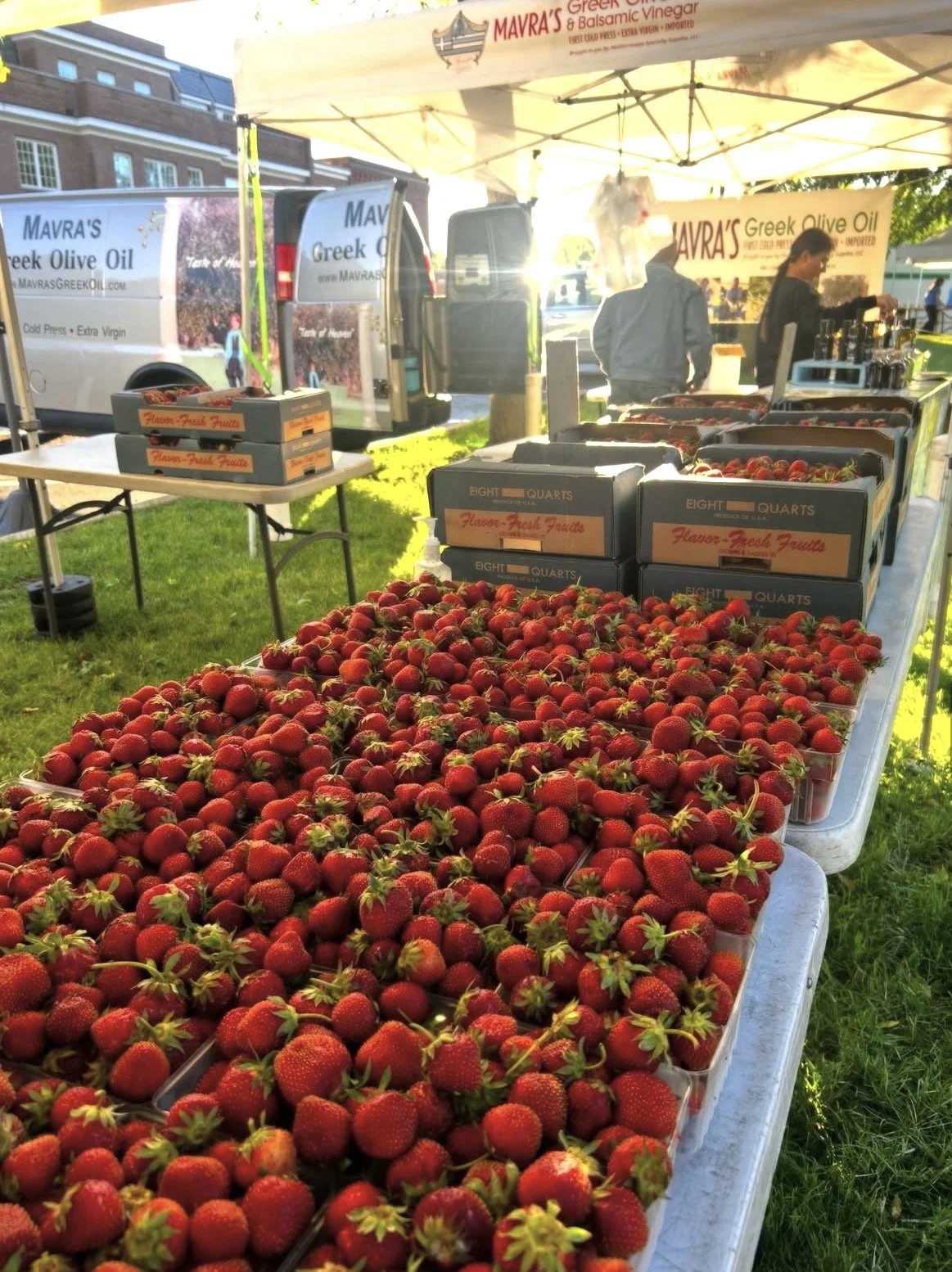
For Kate Cole, the Lake Bluff Farmers Market is about much more than what ends up in a shopper’s bag. Now in her third season managing the market, Cole has become deeply invested in the farmers and small producers who arrive on the Village Green each week - and in helping shoppers understand what it takes for them to get there. Some drive hours before dawn after loading their trucks the night before. Others bring children who work alongside them, continuing family farms across generations.
K & K Farms travels from Michigan; Arrowleaf Farm is a small homestead operation where children work beside their mother raising crops and animals. “These farmers are working so hard to get to that harvest point,” Cole says. “They’re coming with their families.”
Cole’s connection to farming began long before she took over the market. She grew up on a dairy farm in Wisconsin, where her family raised crops and kept a large garden. Her mother canned and froze what they grew, and eating with the seasons was simply part of everyday life. Cole still does it herself, buying sweet corn from the same Wisconsin farm her family has visited for years and freezing it for winter.
That background shapes the way she thinks about the Farmers Market today. For Cole, supporting small farms is not simply a matter of choosing local produce over something from a grocery store. It means understanding the work behind the food and recognizing that farmers need customers willing to follow the rhythm of a growing season. “Watch your market grow with the season,” she says. That might mean lettuces early in the summer, followed by flowers, berries, peaches, tomatoes and corn as the weeks progress. It also means accepting food that looks as though it actually came from the ground.
Cole laughs that some supermarket carrots can seem “too big and too straight.” Part of what she hopes to do is help shoppers become more comfortable with seasonality and with produce that may not look perfect. She would eventually like to add more education to the market, including demonstrations on preserving seasonal food through freezing and canning. The idea is simple: buy more when something is abundant, learn how to preserve it, and enjoy it months later.
But Cole is just as conscious of what the market asks of its vendors. Farmers and producers commit to the full season, meaning the vendor who enjoys a packed July morning is also expected to return on a cold, quiet October one. “They could come on July 3 and make the most money they’ll make in one day,” Cole says. “They’re also going to show up for me in October when they make hardly anything. And it’s cold and it’s dark.”
That commitment matters when the Farmers Market Committee selects vendors each year. Returning vendors are valued, but so are reliability, quality and the mix of businesses that make the market feel complete. Cole approaches those decisions with the vendors’ success in mind. “I feel very strongly about their passion and their entrepreneurship,” she says. “If they’re coming here, I want them to have their best day of business.”
That philosophy has also changed the feel of the market. Cole took on its social media to build more excitement around Friday mornings, while new vendors have brought different foods, families and backgrounds onto the Village Green. Children accompany parents to their booths; longtime farmers work beside new entrepreneurs; shoppers begin recognizing the people who grow and make what they buy.
For Cole, that is ultimately what a farmers market should do: shorten the distance between a community and its food, as well as between the people on either side of the table. The farmers gain customers who understand the work behind what they sell. Lake Bluff gets fresh food, a lively, connected Village Green and a better sense of where that food came from. And if Cole has her way, the market will leave people knowing a little more about both.